Wednesday, 26 October 2011

Cowboy Bebop

Title: Cowboy Bebop
Distributor: Sunrise
Genre(s): 
drama, action, crime, space, bounty hunters

Age Rating: 13+

Episodes: 26
Aired: 
 3 Apr 1998 - 23 Apr 1999
Official Site: at http://www.sunrise-inc.co.jp/international/index.html

Authors Rating: 9.5/10


The year, 2071. With the rapid expansion in space colonization, it became necessary to create instant travel between planets. The result was a number of subspace gateways; however, inadvertently, an accident during construction caused great damage to the Earth. In this time, criminals thrive across the solar system, and someone needs to clean up what the authorities cannot: bounty hunters. Among these are former mobster Spike Spiegel and former police officer Jet Black. Along with gambler Faye Valentine and hacker Edward, they put the law in their hands, for the safety of others, to reconcile their pasts, and most importantly, to put food on the table.


I know, a great soundtrack, awesome fight scenes, and downright good characters, there’s gotta be a catch. Not this time. At the twilight of the 20th century, anime was at its peak giving rise to Cowboy Bebop, a series that went above and beyond all expectations. Aside from one small, yet potentially critical flaw, the viewer is left satisfied on all levels. Perhaps I’m just being nostalgic because this was the first anime I watched which wasn’t some Saturday morning bastardization. But there’s more to this than that.


The first thing I would have to say about Bebop is that it’s got class. I don’t think there is any musical genre Kanno Yoko can’t do. The blues create a perfect atmosphere, and even on its own it’s a treat to listen to. Much like Escaflowne’s(1,2) epic chorus andTurn A Gundam’s folksy bluegrass, one is entranced by the score to the point that you might as well be at the symphony. In all honesty, the first time I heard Bebop’s music, I had no idea that it was from an anime soundtrack, and boy was I surprised hearing it in the series.


Visually, the series is stunning, with a style that seems unique to anime. Despite being science fiction, many parts give off an early 20th century jazzy vibe, which complements the story and music well. However, when the animation needs to show its sci-fi face the moment is captured perfectly. And it doesn’t just look good, it moves well too. Many anime boast about their amazing fight scenes but few deliver. The action here is fast paced, engaging, and totally void of stock footage.
However, this is all icing on the cake. Where Cowboy Bebop delivers more than just about anything else is in its characters. Spike Spiegel is the ultimate badass, rivaled by very few. The rest of the main cast is just as good including the well developed Faye, Radical Edward, and Jet who emits rays of awesomeness. Beyond being likable and interesting, the characters also succeed relationship wise. Chemistry between the Bebop crew is pure, lacking even a single forced moment. The only characterization I’ve seen that rivals this is probably Planetes.


Bebop, also, has one of the most fun and addicting plots in anime. The idea itself is simple; however, it is compelling as well. The compelling characters at the helm make you interested in their dreams and situations. The series is full of good examples of episodic stories. One, for example, involves Ed’s misadventures while chasing a narcotics dealer in a setting closely resembling the Wild West, while another involves a sympathetic story set on Venus involving Spike’s interactions with a man who wants to learn martial arts from him - for very personal reasons that Spike discovers later. These are just a few of the great stories and great characters that result in some of the most memorable moments ever to be shown on the small screen.




Cowboy Bebop is so well made that I didn’t want it to end. There was so much to it, but at lot more could have been possible. It didn’t help that Spike’s story felt a little incomplete. Not bagging on the ending, it was excellent, but I can only imagine how much richer the series would have been given another five to ten episodes. What I personally experienced was similar to when I watched Fafner, being so entranced, so connected that I wished it could go on much longer. Alas, that is a sign of good storytelling which I can forgive, especially with a standalone movie that came later. I could go on forever, the epic moments, the fun battles, the dub that was as good (maybe better) than the original. But I digress, this review is starting to go overboard. I bid you ado, until next time, space cowboy.

Saturday, 22 October 2011

Nana

Title: Nana
Distributor: Madhouse Studios
Genre(s): 
drama, comedy

Age Rating: PG

Episodes: 47
Aired: April 6, 2006 - March 26, 2007
Official Site: at http://www.madhouse.co.jp/

Authors Rating: 9/10


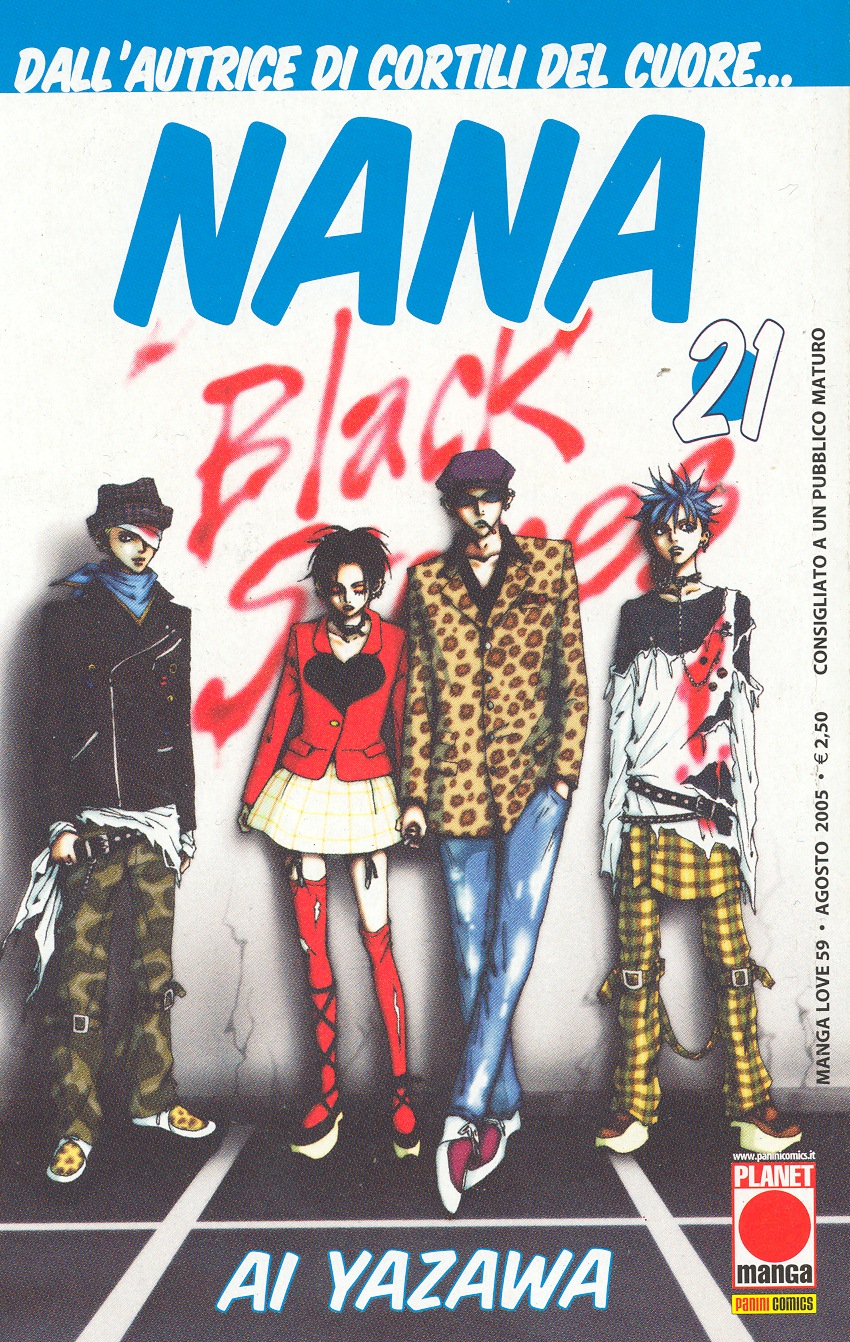
In order to chase after her boyfriend, Komatsu Nana decides to move to Tokyo. During a train trip to the city, she sits next to an enigmatic but beautiful woman carrying a guitar bag. Following a bit of small talk the two realize that they share the same given name, “Nana”. This chance encounter begins a cascade of events that intertwines these two people’s futures and hearts.


I’m about to say something that many of you will relate to but will never candidly admit: I live vicariously through anime characters. Yes, I know these characters are fictional and their tribulations are merely illusions created by a bunch of sweaty animators in cubicles (and, yes, I am seeking professional help). However, I can’t help but relate with some characters on a personal level. Fictional or not, there are some emotions that resonate on a universal level. As I watch a show, I sometimes get caught in the moment and think: “Hey, I‘ve felt those emotions before! I understand what they are going through!” While such feelings are rare, when I experience them I know that i’m watching something great.


Nana is a soap opera-esque series about two individuals with the same name but with two different directions in life. However, don’t expect the usual trite fanfare about love, friendship and triumph. While the 
show initially starts out as a mellow, often comedic slice of life anime, things quickly go awry as relationships break up and bonds fade. Life slaps hard, and the warmth from a friendly hand cannot dull the bitter sting. While it takes the show nearly half its run to build this delicate house of cards, the second half becomes a heartfelt tour de force. I’ve used the phrase “down to earth” to a point where I’m sure it has lost any meaning. I’ll tell you now that this show has some of the most believable characters since the likes of Honey and CloverPlanetes and Beck. It’s true that not everyone becomes rock stars, but I can seriously imagine some of these characters being my real life next door neighbours.


Madhouse Studios returns with its usual high quality animation, and the music is simply amazing, but it’s the seiyuu performance that takes the aesthetic cake. No matter how eloquently a script is written, lackluster voicing can kill the emotional impact behind the words. The voice actors for Nana fit the bill and then they take it to the next level. The exceptionally strong script is brought to life by these talented individuals in a way that sends chills down my spine. For me, it’s no surprise that the incredibly talented Hirano Aya (Suzumiya Haruhi from The Melancholy of Haruhi Suzumiya [1,2]) lost out to Paku Romi (Osaki Nana) in the first Seiyuu Awards. Paku is able to manipulate even the most subtle vocal inflections resulting in a performance that feels like a real live person speaking from the bottom of her heart.


I firmly believe that Madhouse Studios makes some of the best manga-to-anime conversions in the industry and that Nana is no exception. The ending leaves the door wide open for a second season, but I am more than satisfied at the ride I’ve had. While not everyone will enjoy the amount of melodrama present, I say give Nana a try and see if it can sway your heart in the way it has done mine.

Thursday, 13 October 2011

Afro Samurai

Thankyou for voting! Here is your review!


Title: Afro Samurai
Distributor: Gonzo
Genre(s): 
samurai, drama, violence

Age Rating: 18+ (extreme violence and brutal scenes)

Episodes: 5 + Movie
Aired: January 4, 2007 - February 1, 2007
Official Site: at http://www.gonzo.co.jp/index.html

Authors Rating: 9/10


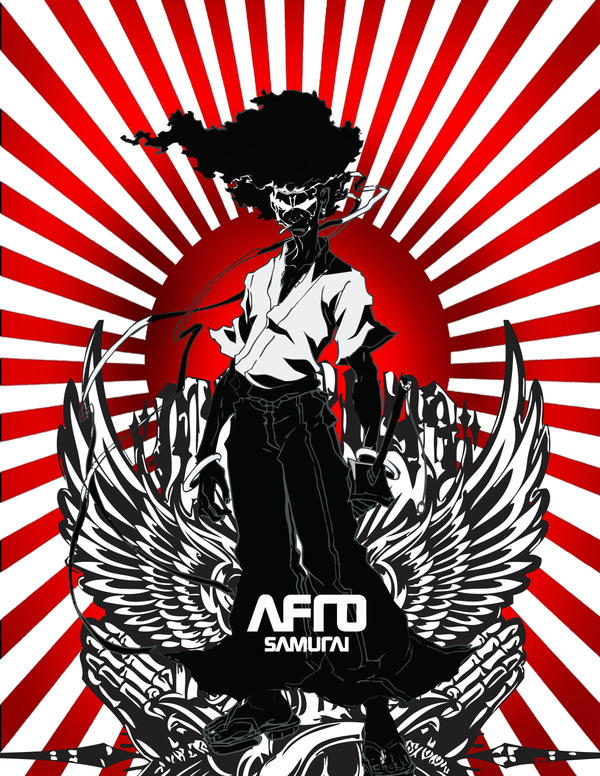
Set in a world where everyone’s desire is to beat up the bigger, tougher guy in order to become the biggest, toughest guy in the ’hood, Afro Samurai serves a plate of standardised plotting. Much of the development comprises a lot of macho stand-offs followed by gruesome resolutions; furthermore, the protagonist has no other motive for his deplorable actions except revenge against the individual who killed his beloved father - the owner of the number 1 head band - when he was barely old enough to remember it.


As Afro predictably hacks his way through one unfortunate challenger after another, the creative design continues to retain its fascination. Consider a irreverent world setting where rocket launchers are used in close-combat as easily as daggers - sex and violence are equally gratuitous - and the main character wears a pair of 18th century oriental bell bottoms. Even the chief antagonists are a menacing Pentecostal sect with fervent sermons drawn directly from the gospel preacher stereotype.


Afro Samurai consists of smooth, groovy, funky stuff and borrows its hard edge from African American culture in a way that brings to mind a bloodier, brawnier, but less original Samurai Champloo.


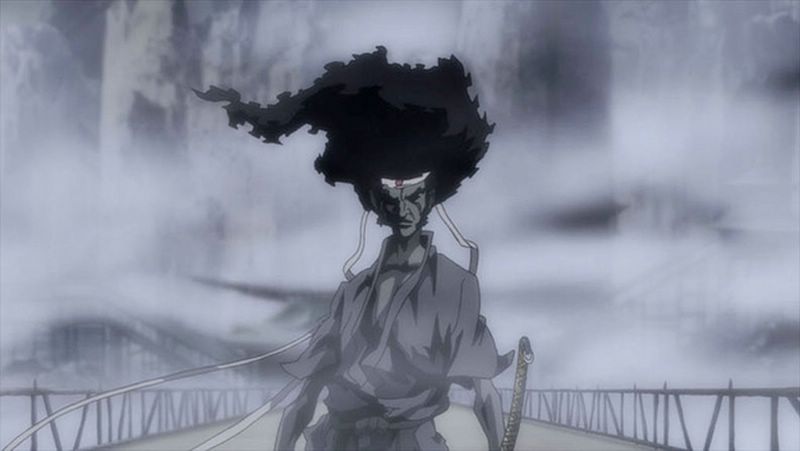
Alongside visual feasts Afro Samurai is at heart a long sequence of set pieces intentionally arranged to wow viewers who like rapid story progression, gory battle scenes and action so fast that if you blink you will miss. Afro dodges crossbow bolts, parries double swords, and carves flying bullets with the unnerving precision of a murderous master chef, all to an eerie backdrop of deep shadows, sinister greys, and hot splashing reds.


More than that, the show offers some excellent stylistic ‘comic book’ touches, from the majestic way hair floats to the ethereal fluttering of bandanna's and other loose material. Afro Samurai also makes the best use of smoke I’ve seen in Anime, including claustrophobic shots of steaming gun nozzles and cigarette fumes pumping out of nostrils, which adds to the intense 'hellish' atmosphere.


Unfortunately, stylistic excellence does not extend to the soundtrack. That is what many would tell you. I, however, completely disagree with the majority. I think the sound track is completely incomparable to Samurai Champloo's. The two Anime's are completely different. Afro Samurai is much darker and sinister. For this reason the opening music fits perfect with the dark nature of the show. If I had to compare it to Samurai Champloo I would say that I honestly preferred Afro Samurai. All that can really be said is to listen to both of them for yourself. Both Anime's have very memorable opening themes. Music within the show - Afro Samurai - has been heavily restricted and replaced by natural sounds and that add to a more eerie setting and provide a heavier atmosphere to the scenes. Music that is used is usually upon victory where our ... hero? ... Is leaving the battle field.


The men are all cold killers or shop owners, the women purely decorative, and the ham-fisted villains fall to Afro’s sword at the drop of a dismembered head. As for Afro himself, viewers need only know one thing: he’s hard. He’s so hard he could break rocks by just sitting on them. He’ll fuck a brother up quicker than he can utter ‘Yo momma’. Etcetera. In short, Afro is vacuous and only entertaining while he’s killing people; in fact, his blinkered, unrepentant lust for revenge even at the cost of allies is wholly unattractive without the necessary background substance to make it understandable.


As a pleasant surprise, the English dub consists of street lingo to match the show’s urban flair. It’s novel but it’s also rather corny. At worst, there’ll be Samuel L. Jackson’s monosyllabic deadpan performance as Afro filling up the empty scenes of the show, and making the 'lone traveller' part much more entertaining and gives the show some comic value. This character represents the internal Afro Samurai, which he suppresses but never the less is still there. 


Compact but viscerally impressive, Afro Samurai is one for the adults. It provides excellent visual entertainment and a gritty atmosphere that countless will find transiently enjoyable. Come for the style, watch for the stunts, and stay because it’s short and won’t waste too much of your time.

Friday, 7 October 2011

Elfen Lied

Title: Elfen Lied
Distributor: Arms
Genre(s): 
psychological, horror, drama, violence

Age Rating: R (extreme violence and mature scenes)

Episodes: 13 + OVA
Aired: July 25, 2004 - October 17, 2004
Official Site: at 
http://www.a-rms.co.jp/index.html

Authors Rating: 8/10


Elfen Lied's focus is the blood and gore. There is no doubt about that! The 'Diclonius', an alternate human race, provide most of our blood and gore. The rest of the blood shed is by means of a meagre military response. The Diclonius visually look similar to humans in every respect apart from two small horns protruding from their head. Lucy, our main character, is indeed one of these beings. Our anti-heroine escapes a maximum security government facility, leaving much destruction in her wake. She, like other Diclonius, is triggered into violent states, instigating the ensuing carnage. When angered she makes use of her 'vectors' - a number of invisible, extendible arms - these give her unimaginable strength. She is found naked and bloody, washed up on a beach after her ordeal. Kouta and Yuka take her in and aid her recovery, as Lucy seems to have developed severe amnesia and forgotten everything, right down to her name. The couple name her Nyuu and our story begins.


The plot is weak in places. There are minor twists and individuals suffer memory loss of significant events - often crucial to the storyline - recovered later in the anime. However, this is expected from the initial episode and continues throughout. The violence is consistent the entire anime. This could raise much discussion however I think that describing the violence is very morbid in every sense. It is safer to say the creators of the show certainly paid attention to detail when it came to death.


Nudity is very prevalent in this anime. I did not find it to be tasteless, such as in 'Gantz.' There were no violent fantasies, or uncouth happenings. There was just the female form for all to bear witness. It fits very well with the story. The scene after Lucy has escaped the research facility and how she is found is executed well. After all, why would an experimental subject require clothing? It is not as if this anime was written to be rated 12+. After reading many other reviews and seeing the complaints from these 'reviewers' I would simply refer them to the first 'Ghost in the Shell' movie - some of the greatest animation of it's time - and ask their opinion again? If it is meant to represent something then I see no reason to condemn it. Vulnerability is shown visually in this manner, as is Lucy. Beautiful but deadly.


The backdrops in this anime are fantastic. They are well drawn and demonstrate the artists attention to detail. You will not find any shoddy repetition reels here. A wide pallet of vivid colours is used not only in backdrops, but character design also.


The character design is - as many have said - very generic. I am not a fan of the children's badly proportioned eyes, nor the different drawing style for child and adult. It lacks consistency. All the Diclonius are female and have vibrant pink hair. This is never fully explained in the anime. I would assume it's primary role is for easy viewer identification of species - but where is the interest in that? I would have suggested the horns were enough. They were of heavy focus throughout. 


The development of the main characters is satisfying to watch. Nothing amazingly special. Yet the gore more than makes up for it. Lots of action - which is has a real energy and flow to it - with interesting flashbacks. Side characters have much less development - as to be expected - however a little more depth or side archs in extended episodes would have been appealing. 


Despite the mediocrity surrounding many aspects of the anime it is compelling to watch. It is unlike anything I have ever seen. The violent nature of the show grows on the viewer. Shock value becoming dark humour. Upon reflection it provoked a feeling of uneasiness that I found the violent tearing of humans amusing. The anime kept me wanting more throughout the series. At only 13 episodes there is never a dull moment. No time is wasted with the stereotypical 'filler' episodes - which is always preferable. An absolute must see for all those with a darker side.

Wednesday, 5 October 2011

GANTZ

GantzTitle: GANTZ
Distributor: GONZO
Genre(s): 
supernatural, spirit, death, alien, violence

Age Rating: R (extreme violence and mature scenes)

Episodes: 26
Aired: April 12, 2004 - June 26, 2004
Official Site: at 
http://www.gonzo.co.jp/index.html

Authors Rating: 8.5/10


Gantz starts out as violent as it ends up. Childhood friends Kei and Katou are waiting for a subway and see a drunken man on the tracks. Katou is the good guy and tries to save him, and Kei attempts to help, but their bravery costs them their lives. Kei’s decapitated head flying through the air is a harbinger for the violence to come. The two "awaken" in a room filled with strangers and a large black sphere known as Gantz who, unbeknownst to them, will soon send them on harrowing missions to kill strange aliens; missions which carry a notable reward, and a high chance of dying in very nasty ways. The duo is joined by a very large breasted naked woman, a dog who can’t keep its face out of her crotch, and a company of others. And thus, the violence begins. 


Gantz is a tense, emotion wringing story with a lot of blood and a side portion of... well... all manner of rude things. Unless you are very tolerant of hardship, gore and mature scenes then this anime is not for you. Parents won't want their children to watch these episodes until they are 18... actually EVER. Lets put it that way. Mid-teens will love watching the show when and will miraculously be totally unharmed with the exception of being exposed to a couple of interesting ideas. 


These ideas are as follows (certainly not comprehensive);


1) What happens after you die? Heaven or Hell? ... Nothing? Or it could be something else entirely that no one has considered?


2) Young men tend to be more up for it than have common sense. 


3) Materialist idea of 'you' or 'I'. It appears that almost all of the characters in the show are 'captured' at the time of their death and recorded and transported to Gantz. This either implies that the soul is recordable and re-creatable or that the soul is unnecessary in the recreation of a person. 


4) The weaponry is immensely original. Kei Kurono is certainly the most interesting character in the series. He can be annoying to listen too, is obsessed with the female form and is fully self-indulged, but I think that merely makes him a relatively accurate depiction of a teenage male. One of the key points in this very gore filled series is that violence is real and although the activities in the Gantz games are certainly violent, you can not escape it, even in a place that should be safe like home. This is demonstrated by Kato's little brother being beaten by their Aunt that is taking care of them because their parents are dead. The effects of violence at home, rather than violence in the Gantz activities are what appear to motivate Katou in to incredible rages. Katou, who is the most reasoning character in the series. Kato, who is unable to kill in order to survive or even protect his friends - is driven by the violence at home and school to beat people without remorse and to a pulp.


The character design is beautiful as are the back-drops, some of the best I have seen. However, character development leaves a little to be desired. There is a feeling of shallowness to all but one, Kei's childhood friend who dies with him, Katou. None of the other characters are given much, if any depth or history which leaves an overall 'empty' feeling to the show. 


The voice acting is superb, as one would expect with such a line-up, in both English and Japanese. I feel that the cast have done a superb job, given the lack of portrayed on-screen emotion from the characters themselves. 


As for the music it is a colourful choice. Japanese rap, if you will. I have to admit, it's a nit cliche, yet fun to listen too and great to attempt to jam along too! 


Overall Gantz has many pitfalls and is lacking in a conclusive ending, character depth and tangible story, amongst many other things. However, it is right up there with my most memorable anime's of all time! The scenes and settings, the graphic content and the brilliant animation just impress this one on to your cortex and force it down in to the long-term memory. A definite must see for all who are not squeamish.

Monday, 3 October 2011

Nura: Rise of the Yokai Clan ~ (a.k.a. Nurarihyon no Mago)

Title: Nura: Rise of the Yokai Clan ~ (a.k.a. Nurarihyon no Mago)
Distributor: Studio Deen
Genre(s): 
yōkai, demon, drama, adventure, supernatural, spirit

Age Rating: 13+

Episodes: 26
Aired: 
July 5, 2010 – December 27, 2010
Official Site: at 
http://www.deen.co.jp

Authors Rating: 7/10


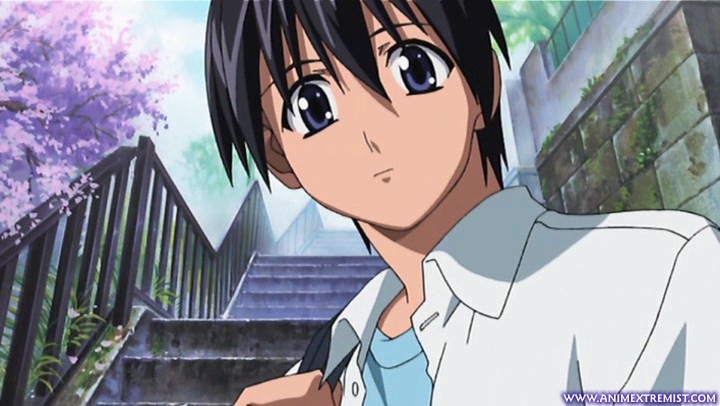
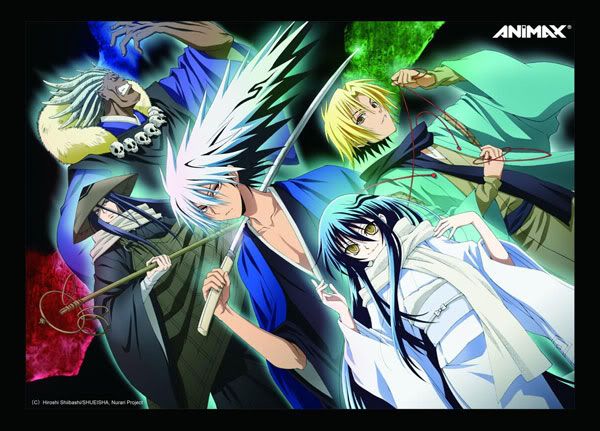
Rikuo Nura is three parts human to a quarter yōkai (demon). Because he is only a quarter yōkai, Rikuo is able to turn into his yōkai form after sunset. Rikuo turns back into his human self when the sun rises without choice. He lives in a japanese house that is inhabited by many spirits, along with his yōkai grandfather (the head of his spirit clan Nura). Trying to escape his fate, he carries out good deeds in order to avoid becoming a full-time yōkai, despite his grandfather's wish that Rikuo succeed him as master of the Nura yōkai clan. Rikuo is different, because he helps humans rather than consumes them. He eventually comes to terms with his demon blood and decides to take up the position of Young Head of the Nura house. Multiple factions aim to stop him or usurp his position, and he must gather friends and allies, a new Hyakki Yakō (night parade of 100 demons) under his banner of "Fear".


Growing up can be a tough experience for many, but it is a lot worse when you are consistently in somebody's shadow. It seems that teenage angst is not all that different in the supernatural realm from the human one...


Nura: Rise of the Yokai Clan follows the life of Rikuo Nura, a 12-year-old boy who is three-quarters human and a quarter yōkaiAs the grandson of Nurarihyon (the supreme commander of the once most powerful clan of yōkai) Rikuo is the successor of the clan, yet to take up the position of his grandfather. Human at heart, in the first few episodes Rikuo initially opposes the evil nature of the yōkai and rejects his role as the next head of the Nura clan, often stating that he never wants to become a yōkai because of what it means. However, as he comes to terms with his true nature and discovers he can actually help humans rather than destroy them, by leading his demon clan, Rikuo embraces his destiny and takes on the challenge of leadership. In so doing, not only must he prove himself a worthy leader by assembling and commanding his very own yōkai army, but Rikuo will also have to contend with different factions and enemies looking to relieve him of his position.


Rikuo, by day, looks like an ordinary teenager and like any other typical junior high student. He has many human school friends, but little do they know about Rikuo's night transformation and double life, which he does his utmost to keep them from! When Rikuo transforms he wields great powers that can strike fear in to his enemies (human and yōkai alike), render him invisible, as well as burn and freeze adversaries. He lives with his demon grandfather in an ancient Japanese mansion, with demonic minions at their service, with may different kinds and varying degrees of power.


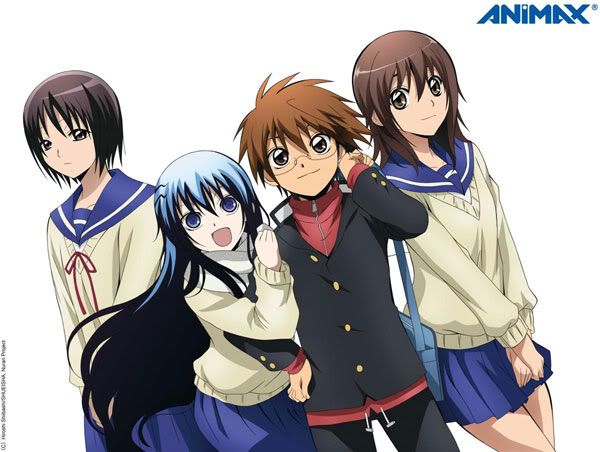
Nura: Rise of the Yokai Clan is based on the manga series of the same title by artist Hiroshi Shiibashi. As Shiibashi’s maiden work, Nura: Rise of the Yokai Clan debuted as a ‘one-shot’ story in 2007 and won the top prize in the ‘Future Gold Cup’ as voted by readers as a work to watch out for. Since then, Shiibashi developed his one-shot story into the full-fledged ‘Nura: Rise of the Yokai Clan’ manga series, which is ongoing.


The anime itself, I feel, leaves much to be desired. Don't get me wrong, the character design is superb, however the action sequences could be far better. They feel very low budget and there is much lack of detail. Quite easily compared to an old episode of batman where by a punch followed by a *POW* is supposed to be thrilling. I myself would like to see some fluidity to the fight scenes and less 'things spin, shoot, smack and you get to see the end result.' That aside the storyline is compelling and the huge amount of different yōkai keeps the viewer entertained. This anime is very reminiscent of one that is less focused on the action and more on the journey. I feel that I should state that the action sequences are by no means terrible. I mean, I have seen worse, *cough* - pokemon - *cough*, yet for something aimed at a little older age group than the previously hinted... There should be a little more production value.

... ... ...... ... ...

The characters are often hard to relate to, with no 'tear-jerker' moments either. There are so many of them that focusing on just one or a few has been difficult, for the shows producers and viewers alike, and has left many characters under-developed. This could be rectified by taking the time to give a few of the main characters their own arcs, rather than giving side characters/yōkai arcs that then after their lovely development fade into the background once more! Sense anyone? The problem is that this in no way appears to affect the impact that the show had upon me. I just could not stop watching. I have seen much better anime's based around yōkai, Karas as a prime example, yet the sheer amount and diversity of them was thrilling to watch. I mean yes some of them looked like July Bugs and others like moths, but there are some really original designs here! 


Nura: Rise of the Yokai Clan boasts a stellar voice cast led by top voice actor Jun Fukuyama (Code Geass – Lelouch of the Rebellion, Valkyria Chronicles) who brings to life protagonist Rikuo Nura. Fukuyama won the ‘Best Actor’ honour at Japan’s first ‘Seiyu (anime voice actor) Awards’ in 2007.


Fans can also look out for the popular voice actress Aya Hirano (The Melancholy of Haruhi Suzumiya, Lucky Star, Death Note) who voices Ienaga Kana, Rikuo’s childhood friend and neighbour who falls in love with him in his yokai form. Like Fukuyama, Hirano received the 2007 Seiyu ‘Best Newcomer’ award.


Produced by Studio Deen, which is responsible for hit anime TV series such as Vampire Knight, Guilty and Giant Killing, Nura: Rise of the Yokai Clan has proven so popular that a second season of the anime series is already currently being aired.


All in all I did want to give this anime a solid 6/10, however, I just could not bring myself too due to the fact that it had me watching episode after episode. There is really something addictive to this anime that keeps you coming back for more, even though it is a long way from being the best of them, or indeed a long way from my personal top twenty. I would strongly recommend watching if you have a spare 20 minutes or so. Just give this a try and although nothing about it will surprise you, you interest just may be peaked like mine.

Sunday, 2 October 2011

Samurai Champloo

Title: Samurai Champloo
Distributor: Manglobe
Genre(s): chanbara, samurai, drama, adventure
Age Rating: TVMA (violence)

Episodes: 26
Aired: May 16, 2004 - March 19, 2005
Official Site: at 
http://www.manglobe.net/

Authors Rating: 9.5/10


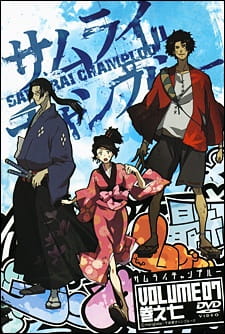
Fuu is a 15 year old young and attractive woman. She is working, at her part time job, as a waitress in a tea-shop when a group of brash thugs with influential political ties stroll in. They begin harassing and pestering young Fuu making fun of her and calling her an idiot, much to her discontent. Enter Mugen. Mugen is a self styled bad attitude samurai who fights with his heart putting his life on the line with every 'dance of destruction.' One thing he can't stand is people flaunting power that they simply don't have, also he can never resist an opportunity for a good fight! He barters with Fuu for a free meal to dispose of the trouble makers, but before she has a chance to answer one of them summons her. In Fuu's haste she manages to trip and spill drink over the ring leader of the group. They pin her down and begin deciding which finger they are going to cut off as payment. Fuu in her desperation announces that she will pay Mugen 100 Dangan (a popular Japanese snack) to save her! Mugen jumps in to action mocking them whilst cutting them literally limb from limb. Unsatisfied with the groups strength, he orders them to go find their stronger superiors. Enter Jin. Jin is a well mannered, polite individual who has dedicated his life to the sword. However, due to his moral ethics causing his bad timing Mugen mistakes him for one of the superior official guards that he demanded. They begin their fight neither besting the other. In the process of their thrilling battle the tea-shop gets burnt down. The two are captured and punished, sentenced to death for their previous actions that lead up to their fight. But, don't for a moment underestimate our little Fuu! She rushes to the scene and upon the execution causes just enough of a distraction to give our warriors the opportunity they need to escape! After the ordeal Fuu announces that they owe her their lives and therefore requests they join her on her search to find ''The samurai who smells of sunflowers'' who she believes to be her long lost father. And. so their adventure begins.


Samurai Champloo starts with a strong first episode that captures the viewers attention. The lightning paced fight sequences are that of a typical samurai anime, however the hip-hop element adds a new and exciting twist. The main plot isn't revealed until near the end of the show, and it's certainly worth the wait! Although the progression of the story seems rather weak we are consoled by the action that wipes away any need for a story in itself! The fight scenes are fluid and often, there is never a lack of action from episode to episode. The downside to the show is that the realism is not quite on par. Apparently wrapping a fatal wound in bandages, after loosing pints of blood, will result in rapid healing over a couple of days, when we as the audience know this not to be the case, even by today's medicinal standards, let alone in the Japanese Edo period! You can expect to see just as much humour from this anime as you can expect action, with quirky little one liners (much like Cowboy Beebop) that left this reviewer chuckling away. However, this by no means detracts from the essence of the show itself.


Samurai Champloo has three primary characters with secondary ones being interjected throughout. Fuu is our female lead who is on a quest to find 'the samurai who smells of sunflowers', escorted by two samurai (our other two leads, Mugen and Jin). Although the characters don't get a 'historical fleshing' until the end, because of this you get the feeling that they are very interesting. Their hidden pasts does, in a way, make them very entertaining and 'watch-able.'  As a result, the anime has a very good mix of characters; the funny, the serious and the emotional slapstick. The wait for the character development, on the side of our warriors, is both suspenseful and entertaining. 


In my opinion, the animation is the best part of the show. The mood is often set by the intricate scenery, with burning sunsets, distant mountains and soothing lakes it is hard not to provoke an emotional response. There is much attention to detail, not only in the backdrops but also in the characters. Small eye movements, freeze-frames and body-language help build atmosphere and suspense, as well as portray the emotions of the characters involved. The best part of the animation is, without doubt or surprise, the fight scenes. The fluidity and consistency of the fight make them thrilling. There is not episode long flashbacks, no stop and talk about how weak the other is for half and episode and no planning of every move. Fights are executed with the sense of a real life or death battle with few words, if any being said, and those that are only necessary to the fight. The frequency of battles increases toward the end of the anime, which ropes the viewer in even more. I found myself compelled to watch episode 18-26 straight through! Should I be ashamed to admit that I didn't even stop for food or drink? I don't think so!


Now, I don't usually care to mention sound in my reviews, as I feel it is often irrelevant and detracts from the anime itself. However, in this instance the sound IS a part of the anime, therefore feel it should be touched upon. The hip-hop element merges surprisingly well with the Edo period clothing and ideals. However not just, as one would suspect, through Mugen. I mean, yes Mugen is the vessel through which we can link the music with his rapid dance style fighting, but it's more than just that. The music is timed with visuals and cut-scenes which add a light-hearted and fun element to the show and at times represents the carefree way of life, and yet, at others the desperate battle for it. To be perfectly honest it is very difficult to describe and explain, as i've never personally encountered this before in any anime I have ever watched. All that can be recommended is to go watch an episode and you will understand.


Samurai Champloo is on my list of top ten anime I have ever seen. Although it may not be everyone's cup of tea, I would highly recommend giving it a chance. I'm sure you will be pleasantly surprised.